Sheet 04Flora
The pine forest and its plants
Albania’s only natural coastal pine forest: the pines, the shrubs, the dunes, the endemic orchid and how to keep it safe from fire.
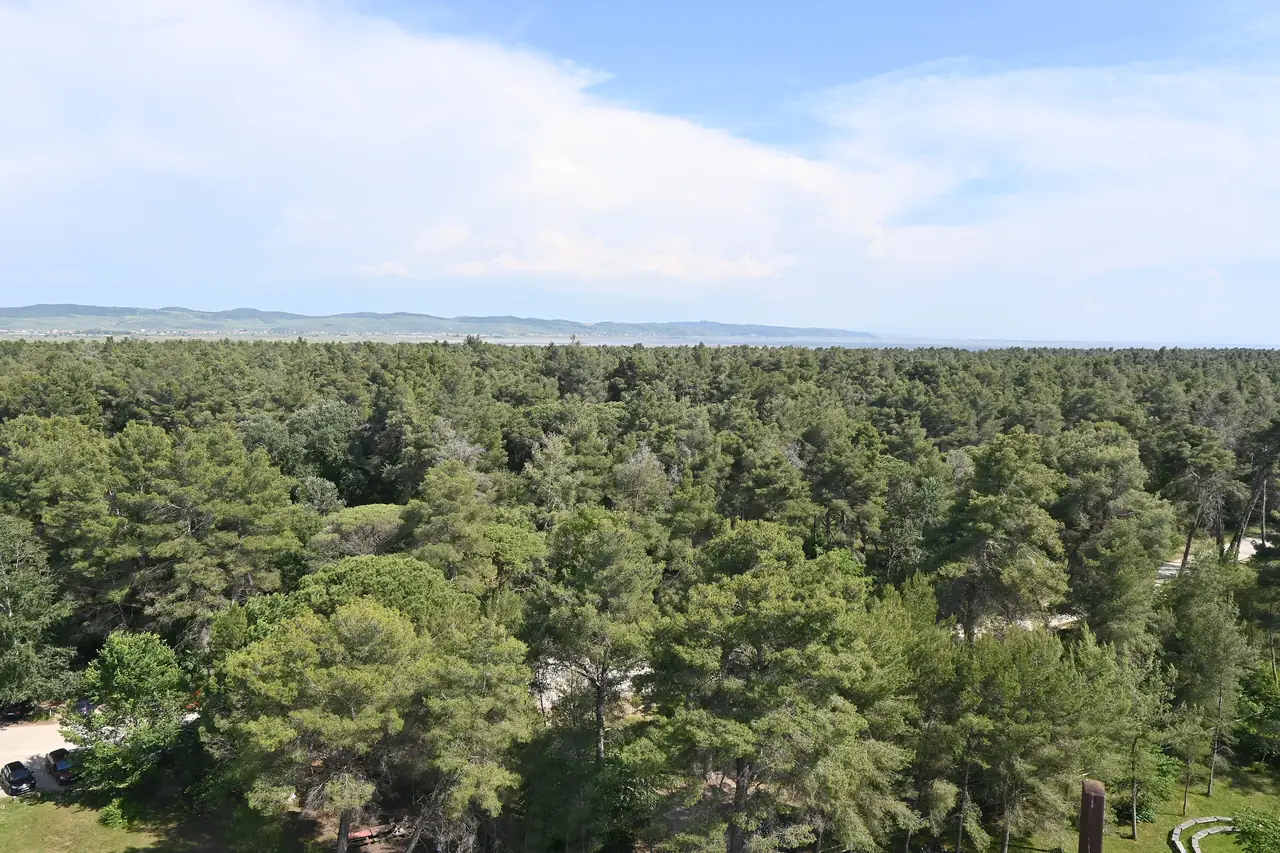
The Divjaka coastal pine forest is the only natural coastal pine forest in Albania. It runs along Divjaka beach and has paths for walking and cycling.1 From the shade of the pines you reach the sea in a few minutes.1
Two pines
This is a native forest of stone pine (Pinus pinea), the only one of its kind on the Albanian coast. Aleppo pine (Pinus halepensis) was brought from Italy early in the 20th century and has made parts of the forest semi-natural.2 The sources do not fully agree: the Key Biodiversity Area factsheet also names Pinus pinaster.
How big is the forest? The 1994 decision records 1,162 ha; other sources give anything from about 1,100 to 1,250 ha.3
Under the pines
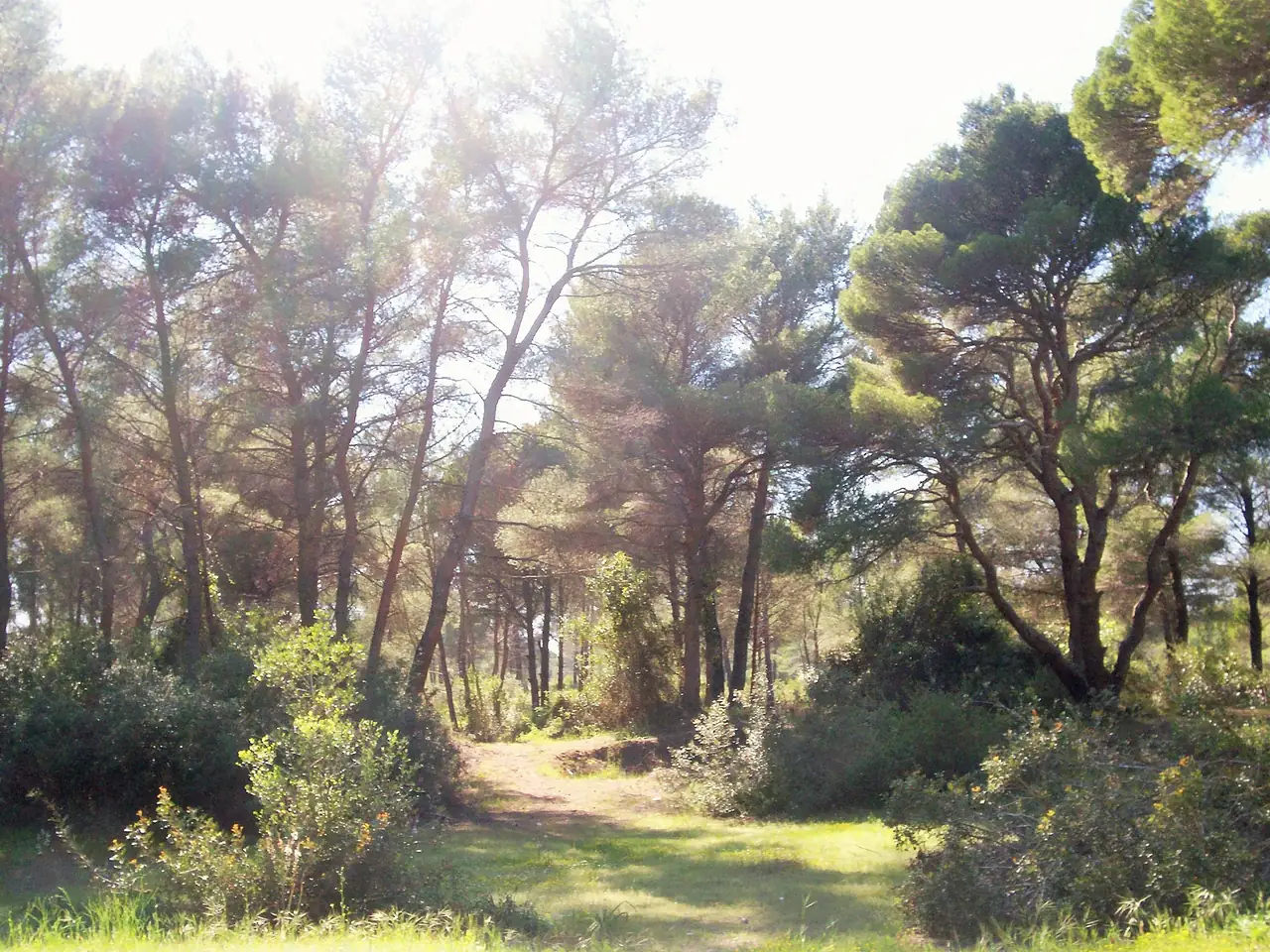
Stone pine grows with myrtle (Myrtus communis), oriental hornbeam (Carpinus orientalis) and tree heath (Erica arborea); Aleppo pine with juniper, Phillyrea angustifolia and other shrubs.4 Pedunculate oak (Quercus robur), field maple and narrow-leaved ash have also been recorded in the park.2
Plants found only here
The endemic plants include Aster albanicus subsp. paparistoi and the Albanian orchid (Orchis albanica), which flowers in spring in the sunny, open parts of the forest.4
Dunes and salty ground
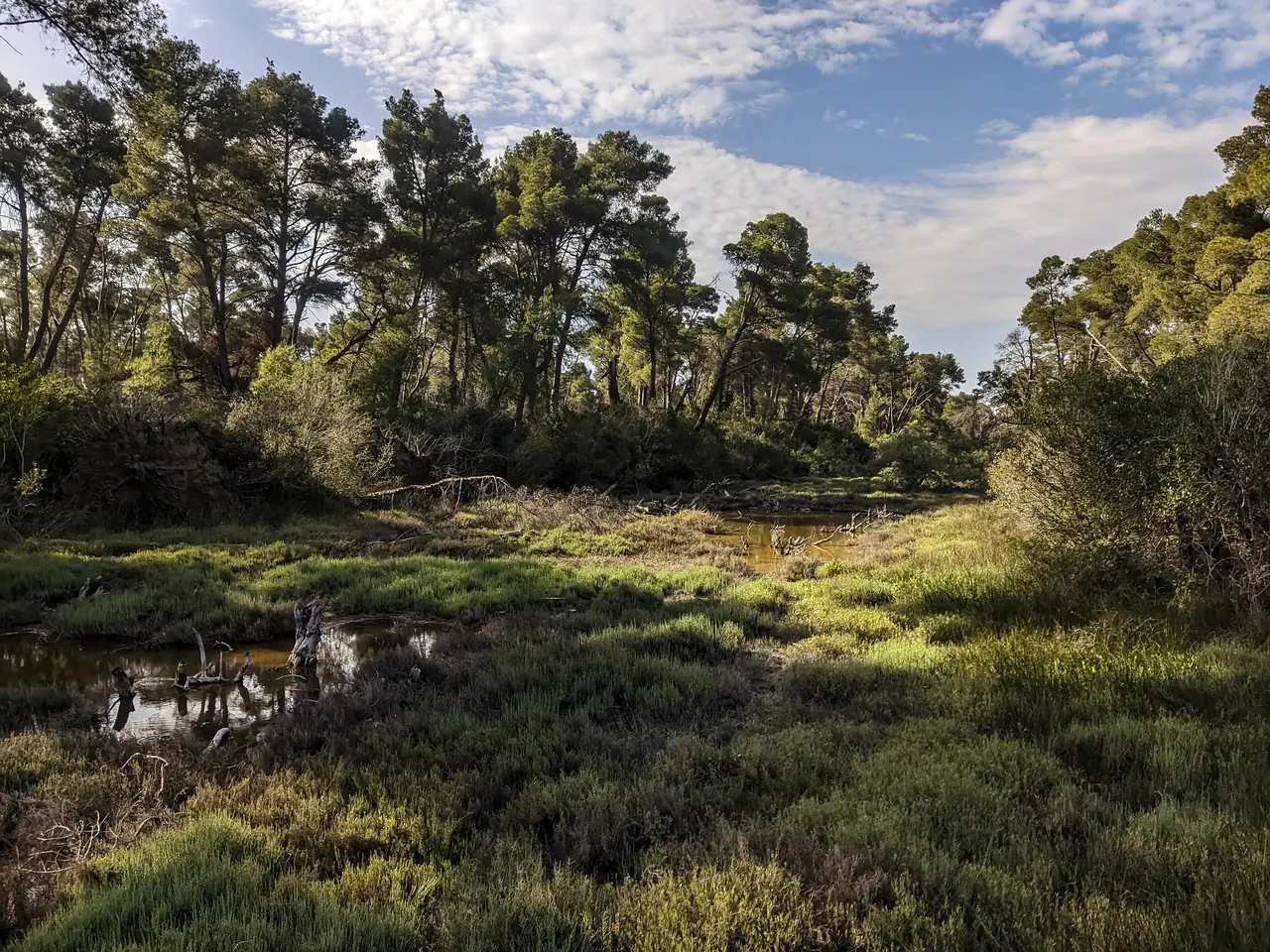
On the dunes grow large-fruited juniper, sea daffodil (Pancratium maritimum) and Cyperus kalli; further inland, pines with mastic and myrtle, while brackish patches hold Juncus acutus, Schoenus nigricans and Saccharum ravennae.5 The EU-protected habitats found here include coastal lagoons, coastal dunes with juniper and wooded dunes with pine.6
Keep it safe from fire
Summer is the hardest time for fires in the park; many start when farmers burn fields close to the forest.7 In the sustainable-use sub-zones, camping and lighting fires outside designated points are forbidden, and so is collecting plants on a large scale.8
The figures and dates on this sheet come from the sources below, opened on 23 October 2026. Where sources give different values, we show them as a range.
Sources
- 01AKT – Divjaka coastal pine forest · Agjencia Kombëtare e Turizmit (AKT) · accessed 23 October 2026
- 02Ramsar Information Sheet, Karavasta lagoon ecosystem (1995) · Ramsar Sites Information Service · accessed 23 October 2026
- 03Council of Ministers Decision No. 413 of 22.08.1994 on the Lagoon of Karavasta and the Park of Divjaka (FAO FAOLEX) · FAO FAOLEX · accessed 23 October 2026
- 04MedWet Managers Network – Karavasta Lagoon Ecosystem (updated Feb 2022) · MedWet · accessed 23 October 2026
- 05Colacino & Marka 2009, Bryophytes of the Karavasta Lagoon area – Phytologia Balcanica 15(1) · Phytologia Balcanica · accessed 23 October 2026
- 06Bino T. et al. 2023, Përmbledhje faktike mbi ndikimin e reduktimit të sipërfaqes… PK Divjakë-Karavasta (AOS technical report) · Shoqata Ornitologjike e Shqipërisë (AOS) · accessed 23 October 2026
- 07AKZM / PK Divjakë-Karavasta – Buletini Gusht 2022 · Agjencia Kombëtare e Zonave të Mbrojtura (AKZM) · accessed 23 October 2026
- 08Ligji Nr. 81/2017 'Për zonat e mbrojtura' (text hosted by IKMT) · IKMT · accessed 23 October 2026